An honest answer
Is India Safe for Tourists?
Yes — India is safe for most tourists who plan sensibly. What goes wrong here is overwhelmingly financial rather than violent: overcharging, commission-driven shopping detours and being misdirected by someone who wants a cut. Serious crime against visitors is rare. Plan your transport in advance and most of the risk disappears.
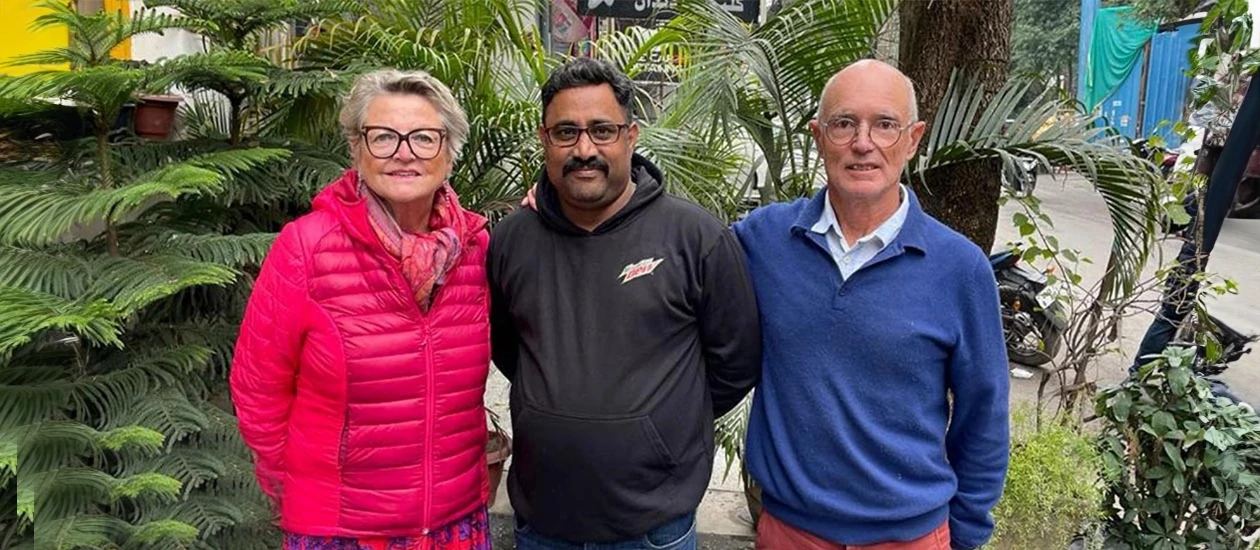 Answered by Randhir, founder & lead driver
Last reviewed 11 August 2026
Driving international guests since 2009
Answered by Randhir, founder & lead driver
Last reviewed 11 August 2026
Driving international guests since 2009
The short answer
- Most of India is normal-precaution travel under both UK and US government advice — the same category as much of Europe and South America.
- The real risk is your wallet, not your safety. Overcharging and commission scams are common; violent crime against tourists is not.
- Transport is where trips go wrong. Street-hailed taxis, station touts and late-night arrivals cause most bad stories.
- Solo women can and do travel India — with more planning than Western Europe requires.
- Do not drink tap water anywhere, and give your stomach three days to adjust.
- Save 112 and 1363 before you fly — national emergency and the tourist helpline.
What actually goes wrong — and what almost never does
Fifteen years of guest feedback, sorted honestly.
Common — plan for these
- Being quoted three or four times the fair price
- A driver or guide steering you into shops for commission
- Being told your hotel is “closed” or “full” by a stranger
- Fake “government tourist offices” near stations
- Persistent touts at monuments and railway stations
- An upset stomach in the first few days
- Traffic that feels chaotic to Western eyes
Rare — despite the headlines
- Violent crime against foreign tourists
- Armed robbery in tourist areas
- Anything happening inside a monument or good hotel
- Trouble in Delhi, Agra, Jaipur or Rajasthan generally
- Problems when your transport is pre-arranged
- Serious illness from cooked food at a busy restaurant
- Being stranded — Indians will overwhelmingly help you
Almost every bad experience a guest reports to us started the same way: an unplanned transaction with a stranger, usually about transport, usually while tired. Remove that one moment and the trip changes completely. That is the single most useful thing on this page.
Why transport is the weak point
The one decision that changes your risk more than any other.
Arrivals are when you are most exposed
You are tired, you do not know the fair price, and everyone at the exit knows it. A pre-booked pickup with a named driver holding your name removes the entire negotiation.
Street-hailed cars are the common thread
Nearly every scam story that reaches us involves a vehicle the guest did not arrange in advance. When one accountable person drives you all week, there is nobody to hand you off to.
Night driving is a genuine physical risk
Unlit trucks, livestock and roadworks make rural night driving the real safety issue in India — far more than crime. We plan routes to finish long legs before dark.
Self-driving is the mistake to avoid
Indian traffic follows conventions that take years to read. Hire the car with a driver. It costs little more — see what a private driver actually costs.
“In fifteen years I have never had a guest harmed. I have had many arrive shaken from the taxi they took before they met me. India is not dangerous. Arriving unprepared at 11pm in a city of twenty million is.”
Solo women, families and older travellers
The answer is different depending on who is asking.
Solo female travellers
Yes, with more planning than Western Europe needs. Pre-arrange every transfer, arrive in daylight, dress modestly by local convention, and share a live location home each day. Full detail on our solo female travel page.
Families with children
India is genuinely warm towards children. Heat, crowds and long drives are the real challenges, not crime. Shorter driving days and October–March travel solve most of it. See family tours.
Older travellers
Very doable with the right pace. Fewer cities, more nights in each, air-conditioned car door to door, and steps planned around. See tours for senior travellers.
Food, water and staying well
The thing most likely to affect your trip — and it is manageable.
| Situation | What we tell guests | Why |
|---|---|---|
| Drinking water | Sealed bottled water only, check the seal is intact | Tap water is not safe for visitors anywhere in India, including good hotels |
| Ice in drinks | Fine in hotels and established restaurants; skip it at street stalls | Good kitchens use filtered ice; you cannot verify a stall's source |
| Street food | Eat it — but where there is a queue of locals | High turnover means fresh food cooked in front of you |
| Salads and cut fruit | Avoid for the first few days | Washed in water your stomach has not adjusted to |
| First 72 hours | Eat simply, stay hydrated, do not over-plan day one | Most upsets happen early, then settle |
| Heat | Travel October to March if you can choose | April to June regularly exceeds 40°C across North India |
| Medication | Bring your own supply plus rehydration salts | Pharmacies are excellent, but bring what you rely on |
Save these before you fly
Two minutes now, genuine peace of mind later.
112
India's single national emergency number — police, fire and ambulance. Works from any phone, anywhere in the country.
1363
The Ministry of Tourism's 24-hour tourist helpline, answered in several international languages.
1091
The national women's helpline. Worth saving alongside 112 if you are travelling alone.
Your embassy
Save the number and address of your embassy or high commission in New Delhi before you travel.
A working driver's honest view of safety in India
Not a brochure — what I actually tell guests who ask me this before they book.
I get asked this question more than any other, and I understand why. India occupies a strange place in the Western imagination. People arrive having read a decade of alarming headlines and having watched documentaries that were, by design, about the exceptional rather than the ordinary. Then they spend two weeks here and go home saying the same sentence to me at the airport: it was nothing like I expected. I have heard it hundreds of times since 2009.
So let me be precise instead of reassuring. India is a country of over 1.4 billion people, and like any country that size it contains everything. What matters to you is not the national picture but the specific corridor you will actually travel — and the classic tourist route through Delhi, Agra and Jaipur, out into Rajasthan, is one of the most heavily travelled and most closely policed tourist regions in Asia. Both the UK Foreign, Commonwealth & Development Office and the U.S. Department of State keep specific warnings for a small number of border and insurgency-affected districts, and treat the rest of the country as normal-precaution travel. Read your own government's current page before you book — it takes three minutes and it is more current than anything I can write here.
The risk is real, but it is financial
Here is the honest version of what happens to tourists in India. Someone will try to take money from you that you did not intend to spend. That is the risk. It looks like a two-hundred-rupee ride quoted at two thousand. It looks like a friendly man outside the railway station who tells you your hotel has burned down and he knows a better one. It looks like a driver who has three “quick stops” at handicraft emporiums built into your sightseeing day, each one paying him a commission on whatever you buy. None of that is dangerous. All of it is exhausting, and it is the thing that sours trips. I have written a separate guide on the specific scams and how to shut each one down, because it deserves its own page.
What almost never happens is the thing people are actually frightened of. In fifteen years of driving guests from the United States, Britain, France, Germany, the Netherlands and Australia across North India, I have never had a guest harmed. Not once. I have had guests arrive at their hotel rattled by the taxi they took before they met me, which is a different problem entirely, and a solvable one.
Almost every bad story I hear began with an unplanned transaction with a stranger, about transport, while tired. That is the whole pattern. Close that gap and India becomes a very easy country to travel.
Why a pre-arranged driver changes the maths
I am obviously not a neutral party here, so judge the argument rather than the source. The most exposed moments of any India trip are the transitions: walking out of an airport at midnight, leaving a station in an unfamiliar city, standing on a street at dusk trying to work out whether the price you have been quoted is fair. If those moments are already arranged — a named person, a known car, a price agreed in writing before you flew — then the openings for both scams and genuine trouble mostly close. You are never negotiating from a position of weakness because you are never negotiating at all.
That is why we publish the names and faces of the people who drive you on our drivers page, and why our safety and vetting page spells out licensing, insurance and what happens if something goes wrong mid-trip. You should expect that level of transparency from anyone you hire in India. If an operator will not tell you who is collecting you, that is information in itself.
What I would tell a friend
Travel between October and March if you have the choice; the heat from April onwards is a bigger threat to your enjoyment than anything else on this page. Arrive into a new city in daylight. Drink only sealed bottled water and give your stomach three days before you get adventurous with food. Dress a little more modestly than you would at home — not out of fear, but because it attracts markedly less attention and Indians read it as respect. Carry some cash but do not flash it. Say a firm, cheerful no and keep walking; it is not rude here, it is normal. Agree every price before the service, not after. And book your long-distance transport before you land rather than sorting it out on arrival.
Do those things and you will have the experience my guests describe at the airport rather than the one you read about before you came. If you want to see how a first trip usually gets structured, the Golden Triangle timing guide and the Golden Triangle tour itinerary are the natural next reads. If you would rather just ask me a direct question, write to us — I answer these myself.
Official sources & further reading
- UK FCDO — India travel advice (region-by-region, updated continuously)
- U.S. Department of State — India Travel Advisory
- Incredible India — Ministry of Tourism, Government of India
- Indian Visa Online — the only official e-visa portal (avoid third-party lookalike sites)
- World Health Organization — India country profile
Government advisories change. This page was last reviewed on 11 August 2026; always check the current version of your own country's advice before booking flights.
Frequently asked questions
The safety questions travellers from the USA, UK and Europe ask us most.
Is India safe for tourists in 2026?
Yes, for most visitors who plan sensibly. Millions of foreign tourists visit every year without incident. What goes wrong is overwhelmingly financial rather than violent — overcharging, commission-driven shopping detours, and being misdirected by someone who wants a cut. Both the UK and US governments treat the main tourist regions as normal-precaution travel.
Is India safe for solo female travellers?
Many women travel India alone each year and have an excellent time, but it takes more planning than Western Europe. Pre-arrange transport rather than hailing it, arrive in new cities in daylight, dress modestly by local convention, and share a live location with someone at home. More detail on our solo female travel page.
Is it safe to travel India with a private driver?
It is the safest practical way for a first-time visitor to move around, provided the operator is legitimate. You avoid negotiating with strangers, you are not dependent on street taxis at night, and one named person is responsible for you all day. Check the driver is named and photographed before booking — see how we vet ours.
Is India safe for families with children and elderly parents?
Yes, and the culture is genuinely warm towards both. The real challenges are heat, crowds, long drives and stomach upsets rather than crime. Plan shorter driving days, insist on reliable air conditioning, travel October to March, and be strict about sealed bottled water.
What are the emergency numbers in India?
112 is the all-in-one national emergency number for police, fire and ambulance and works from any phone. 1363 is the Ministry of Tourism's 24-hour multilingual tourist helpline. 1091 is the women's helpline. Save all three, plus your embassy and your driver's mobile.
Is the food and water safe in India?
Food is safe where turnover is high and it is cooked to order; the usual problem is an unfamiliar stomach rather than dangerous food. Never drink tap water — use sealed bottled water and check the seal. Skip ice and raw salads for the first few days. Most upsets happen in the first seventy-two hours, then settle.
Which parts of India should tourists avoid?
The classic tourist regions — Delhi, Agra, Jaipur, Rajasthan, Varanasi, Kerala, Himachal and Uttarakhand — are visited safely year-round. Advisories consistently single out a small number of border and insurgency-affected areas, principally parts of Jammu and Kashmir away from Ladakh, the India–Pakistan border zone, and some remote central and north-eastern districts. Check your own government's current advice.
Is it safe to drive yourself in India as a foreigner?
We would not recommend it. Traffic follows conventions that take years to read, lane discipline is informal, and rural roads bring livestock and unlit vehicles after dark. Hire the car with a driver rather than the car alone — it costs little more. See what that actually costs.
Ask us anything before you book
Real answers from the person who will be driving you — not a call centre.
Ask on WhatsApp Contact us